

Lead Product Designer
App Design
The Mission
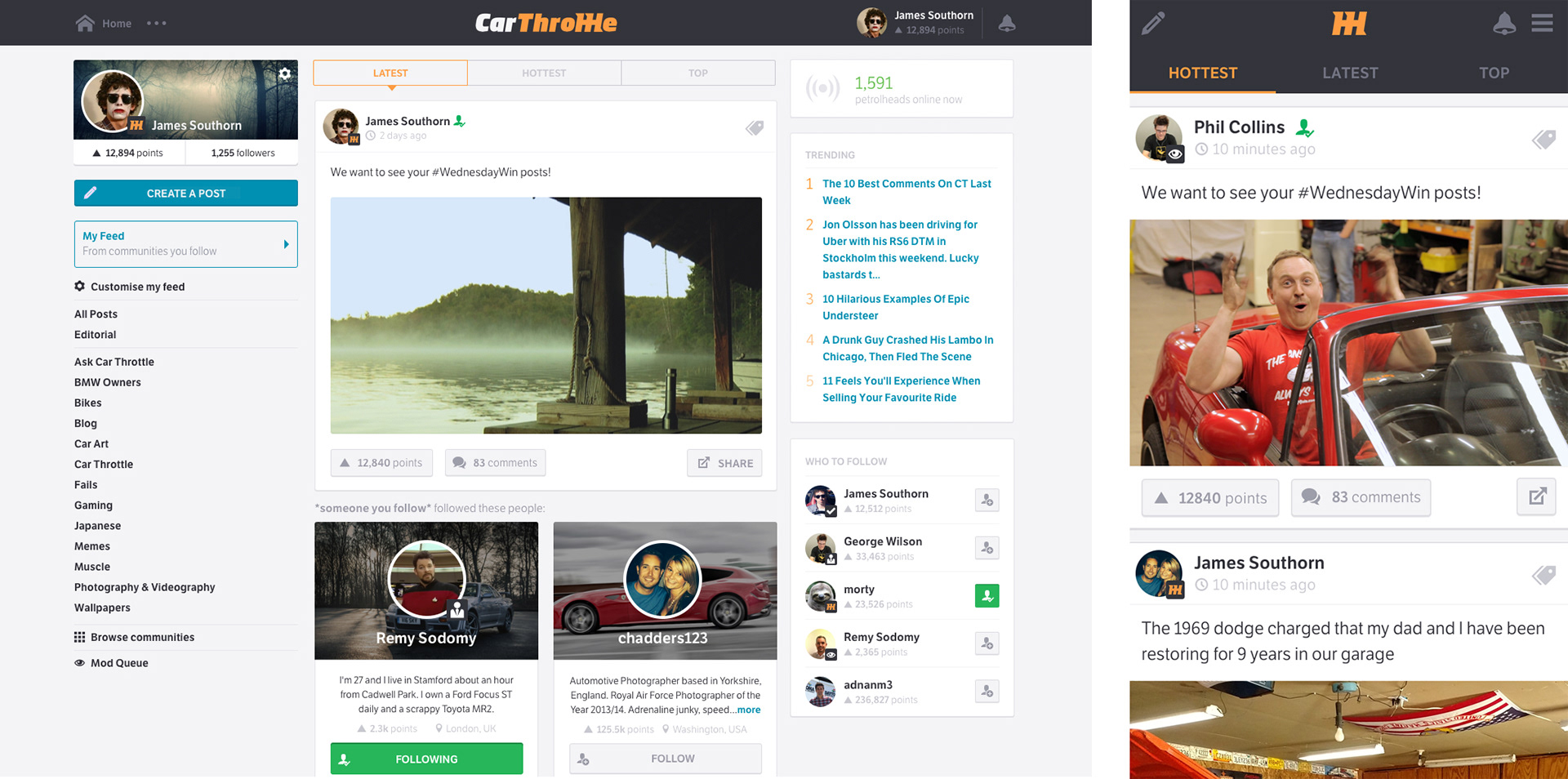
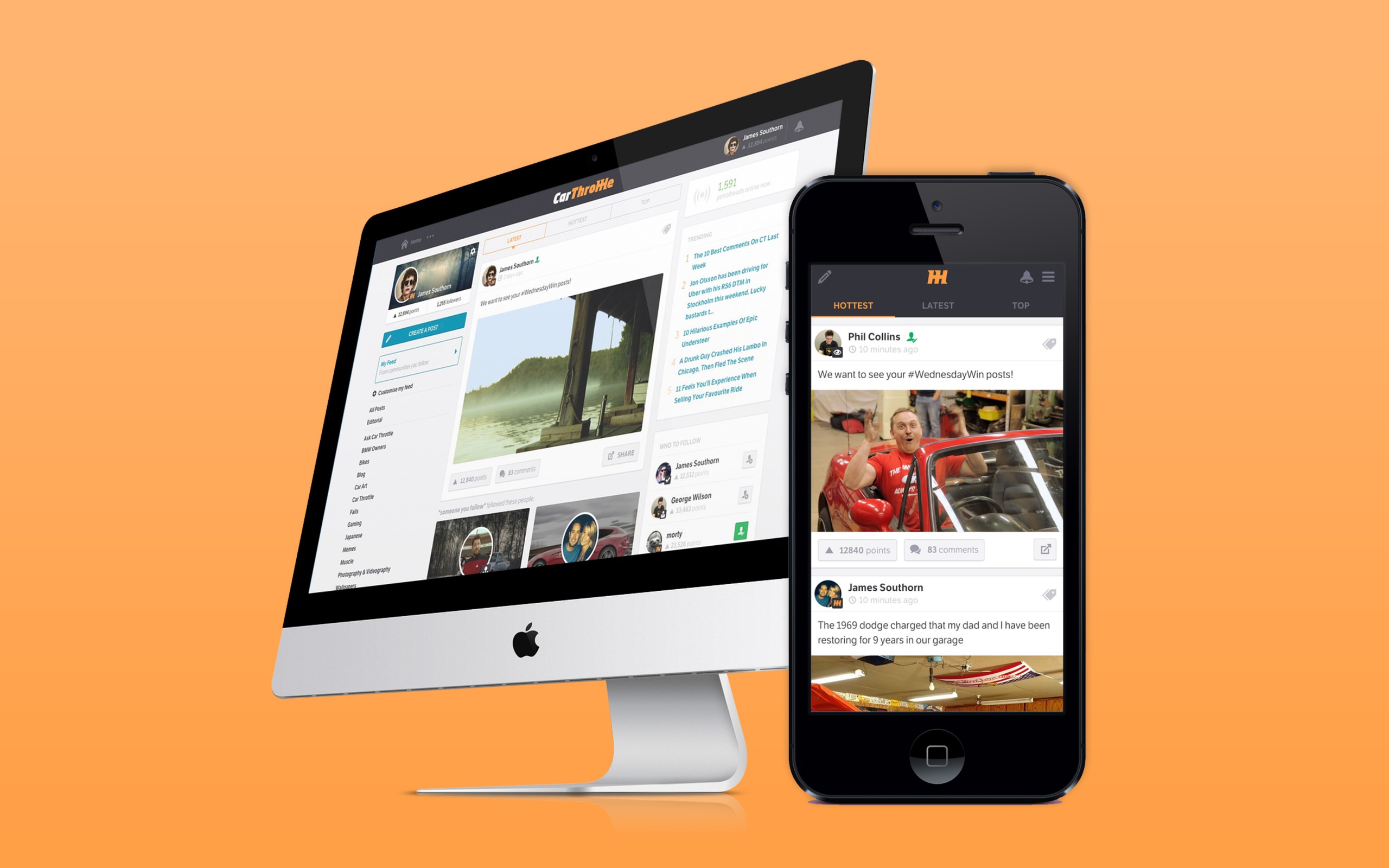
Car Throttle was rapidly evolving from a blog into the "Reddit for cars." I was tasked with leading a complete overhaul of the web platform to support a growing community of millions, focusing on engagement, content discoverability, and brand identity.
The Challenge
The existing site suffered from technical debt and a fragmented user experience. We needed to transition from a static editorial layout to a dynamic, community-driven social platform that felt at home on mobile devices—where 60%+ of our audience lived.
Discovery & Insights
- Behavioural Audit: Used Google Analytics to identify that "Community" and "User-Generated Content" were our fastest-growing but hardest-to-navigate areas.
- Enthusiast Personas: Interviewed power users to understand what drove engagement. We found that "visual storytelling" (memes, car builds, and videos) was the core hook.
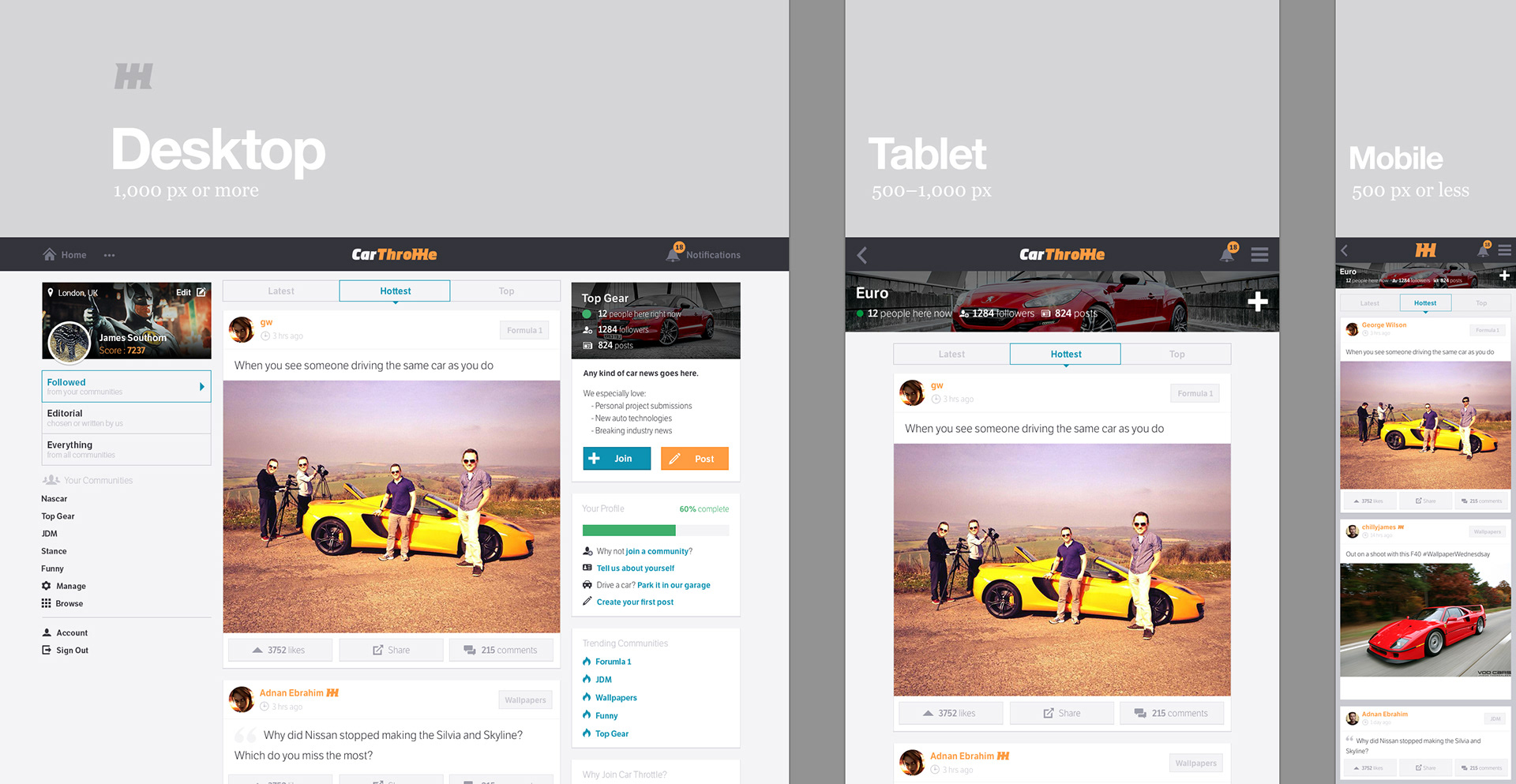
- Mobile-First Constraints: Analysed device data to prioritise performance and thumb-friendly navigation, as our users were often browsing while on the go or at car meets.
The Solution
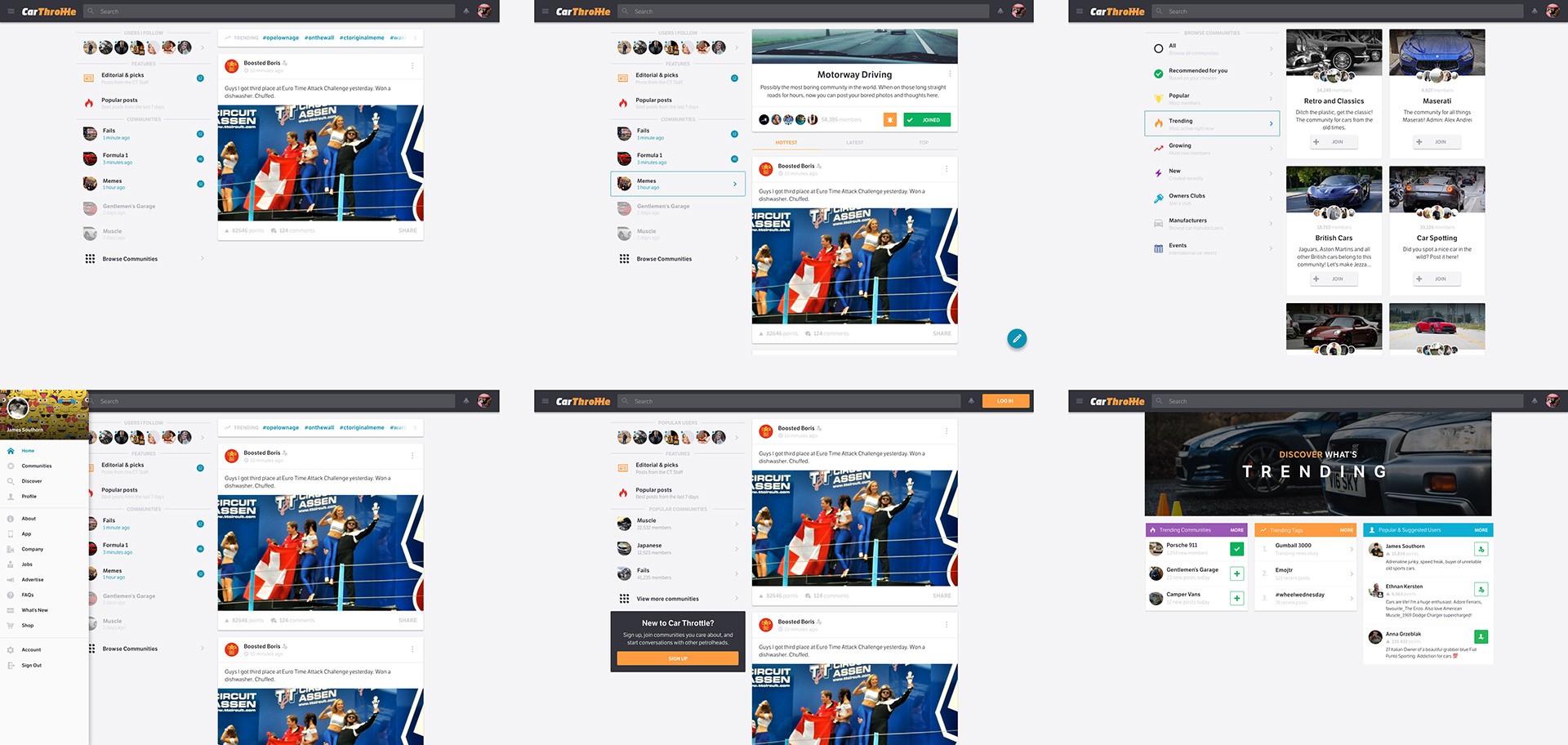
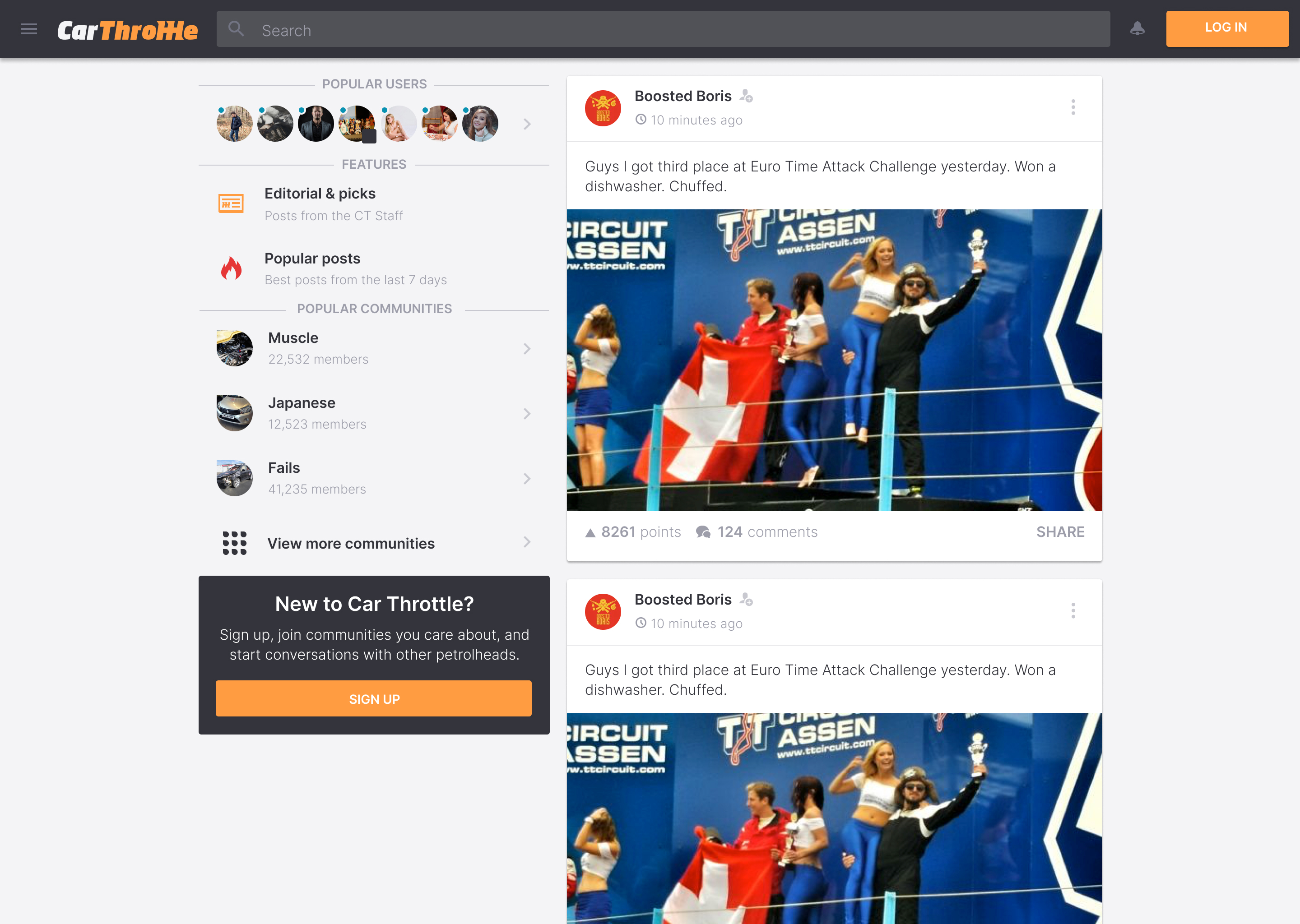
- Community-Centric IA: Redesigned the information architecture to put "Communities" (sub-groups) at the heart of the navigation, making it easier for users to find their specific niche (e.g., JDM, Muscle Cars, F1).
- Scalable Design Foundations: Before "Design Systems" was a buzzword, I established a library of functional patterns and components to ensure visual consistency across the platform.
- Engagement Loops: Simplified the post-creation flow and improved the "feed" logic to encourage more frequent, high-quality user interactions.
The Impact
The redesign successfully transitioned Car Throttle from a static blog into a high-growth social ecosystem, providing the scalable foundation needed to become a global leader in automotive media.
10M+
Monthly Unique Users
Community-Led
Growth
Mobile-First
Resilience
Read article
Top Gear for the Facebook generation

The Guardian
https://tinyurl.com/carthrottle-article
Design Process
The Foundations
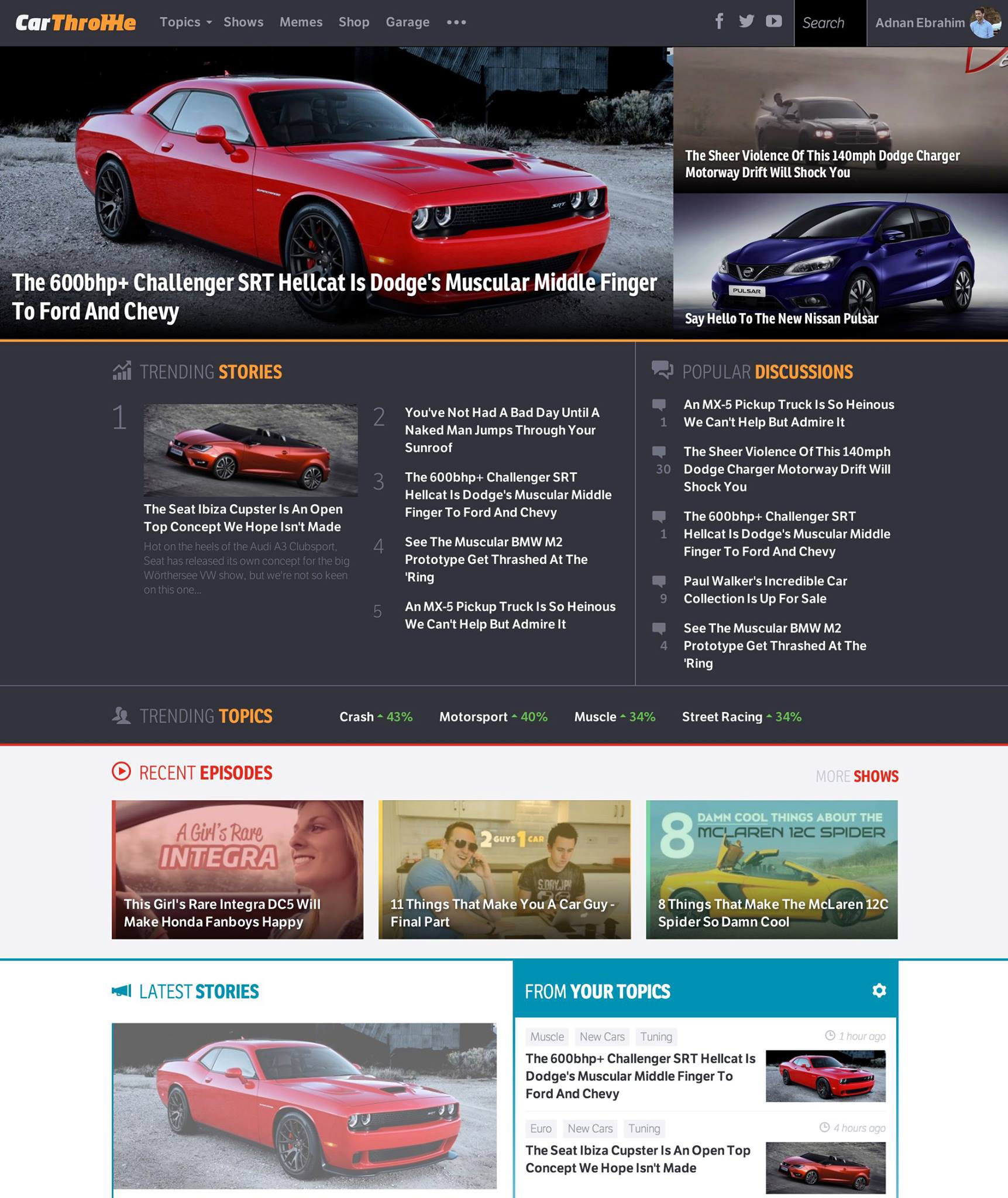
The original site was a "read-only" WordPress blog. To scale, we needed to understand where the friction was preventing community growth.
- Documentation: Analytics & Heatmap Audit I used Google Analytics and Hotjar to identify that 60%+ of users were on mobile, but were struggling with long-form editorial layouts.
- Documentation: Competitive Landscape I performed a deep-dive audit of Reddit and Top Gear, identifying a "white space" for a platform that combined high-end visuals with raw community interaction.
- The Outcome: We shifted the Information Architecture from a "Category" model to a "Community" (Hub-and-Spoke) model, allowing users to follow specific car interests.
The Social Pivot (UGC & Interaction)
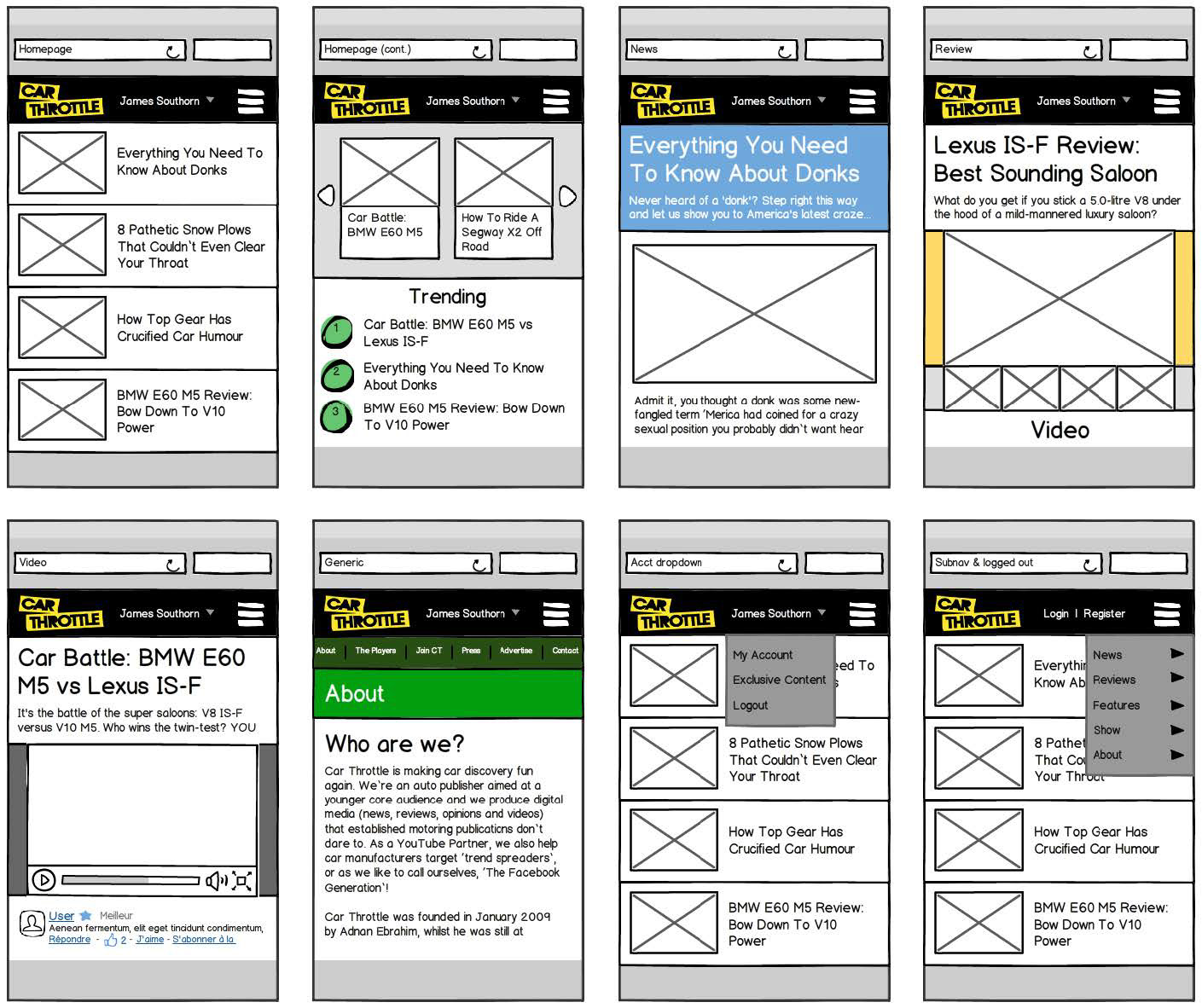
Transitioning from a platform where editors wrote content to a platform where users created it. This required a massive rethink of the post-creation flow.
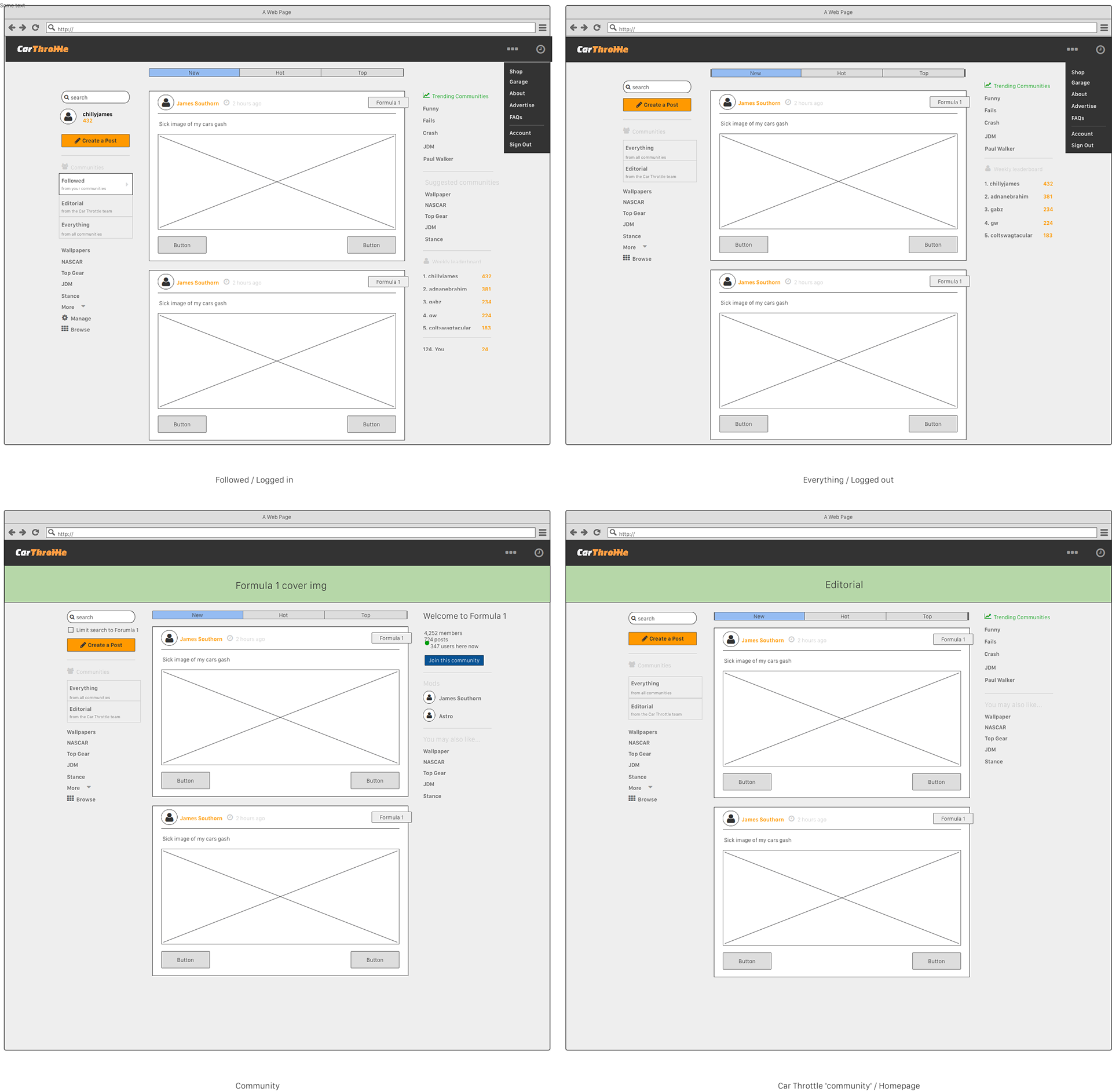
- Documentation: Low-Fidelity Iteration I produced dozens of wireframe iterations for the "Submit Post" flow. The goal was to make uploading a photo of a car as fast as a "one-tap" experience for users at real-world car meets.
- Documentation: Stakeholder Ideation I facilitated workshops with the engineering and commercial teams to ensure our new social "feed" logic balanced user engagement with advertising requirements.
- The Outcome: A simplified, "mobile-first" interaction model that resulted in a significant spike in daily User Generated Content (UGC).
Scaling for 10 million
As the audience reached 10 million monthly uniques, the technical debt and UI inconsistencies became a bottleneck.
- Documentation: Functional Pattern Library Before modern design systems were standard, I established a centralised library of reusable UI patterns. I documented typography scales, button states, and grid systems for the dev team.
- Documentation: Iterative Usability Testing I conducted continuous "speak-out-loud" testing on new UI features to ensure the platform remained accessible and intuitive as we added complexity (like Video and Polls).
- The Outcome: We reduced "design-to-dev" handoff time by 40% and maintained a cohesive brand identity across the entire ecosystem.