

How I led the UX evolution and native app launch for the community that redefined automotive media, scaling to 10M+ monthly users and an acquisition by Dennis Publishing.
users-line
Scaled from a niche blog to a global social platform.

messages-dollar
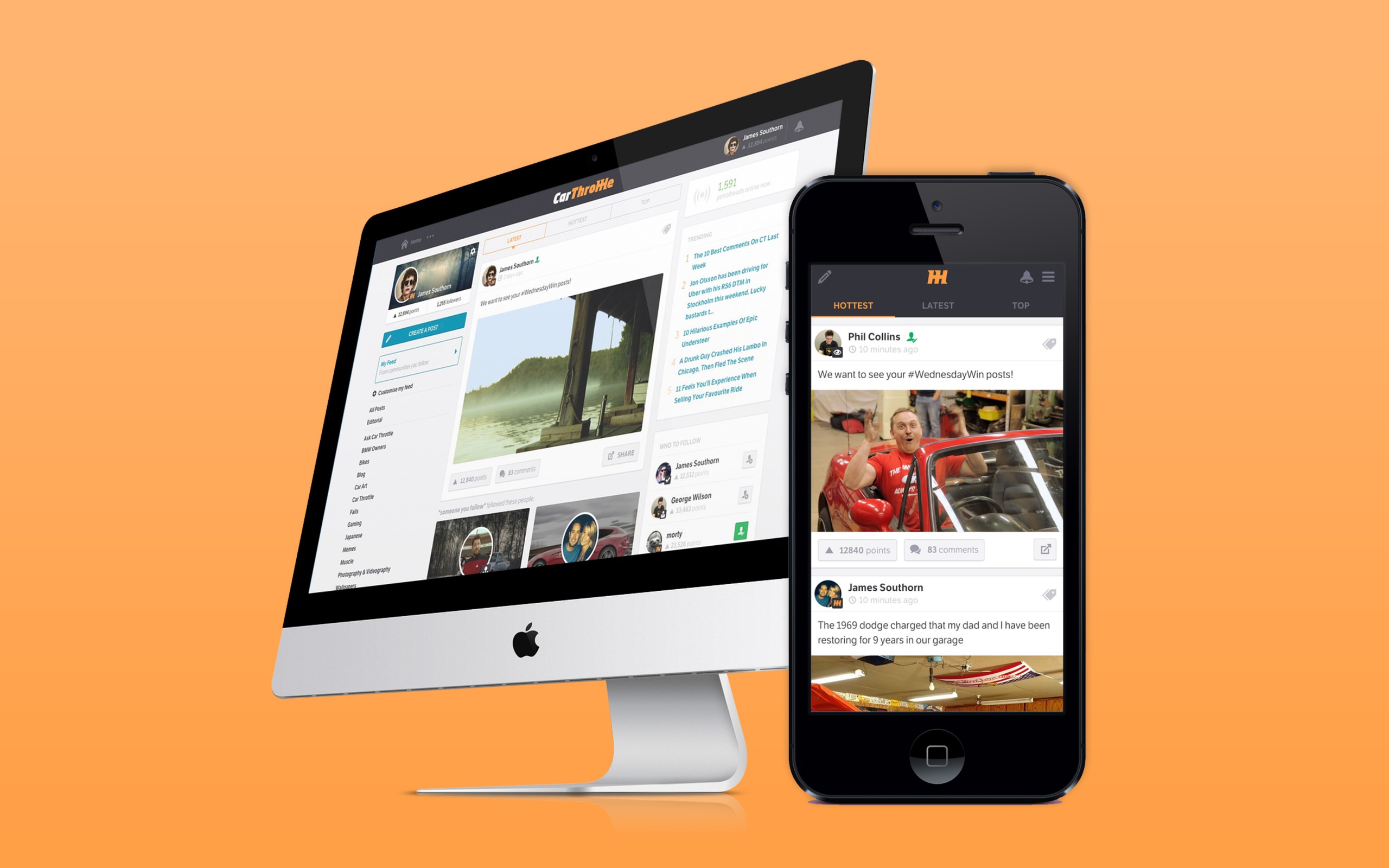
Moved from a high-maintenance WordPress site to a custom-built, responsive social engine.
star
Launched iOS & Android apps with over 200k+ downloads in year one.
The Challenge
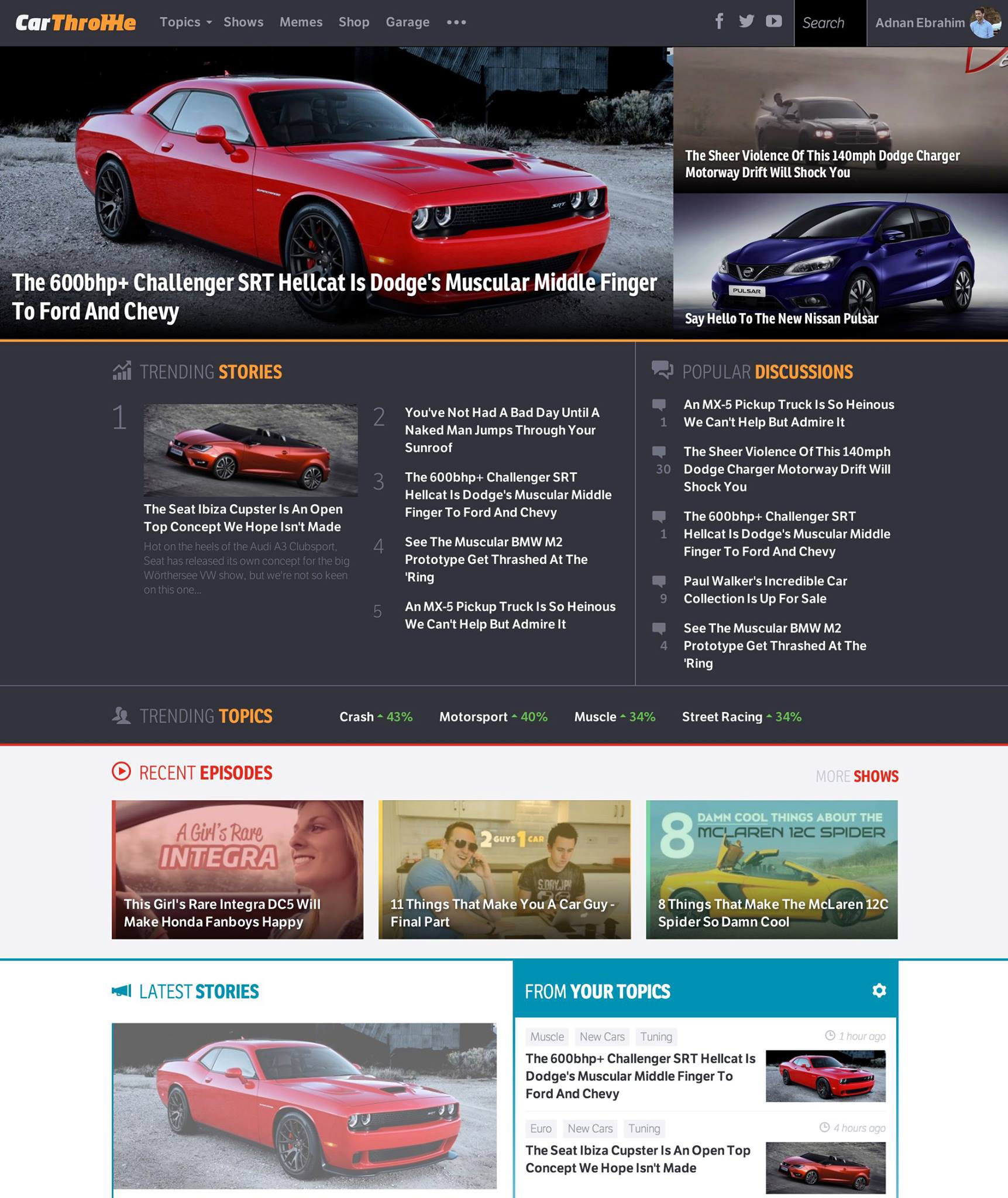
When I joined Car Throttle, the business was operating on a traditional WordPress blog architecture that could no longer handle the traffic spikes or the complex social features (such as user-generated content, profiles, and feeds) required to scale.
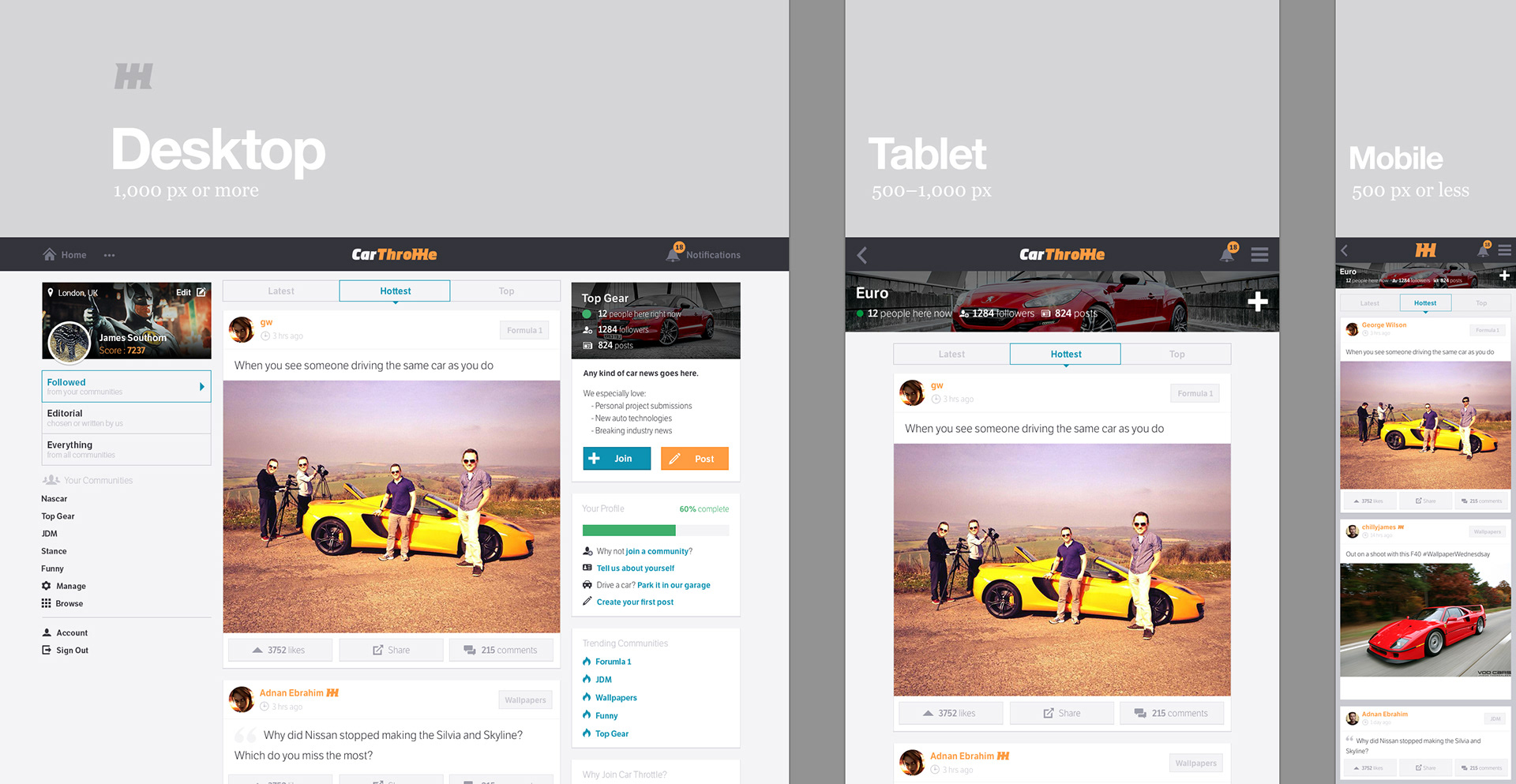
With 70% of our audience accessing the site via mobile devices, the existing experience caused high bounce rates and low engagement. We needed to transition the platform from an editorial blog to a custom, mobile-first community engine while keeping the core enthusiast audience engaged and active.
The Solution
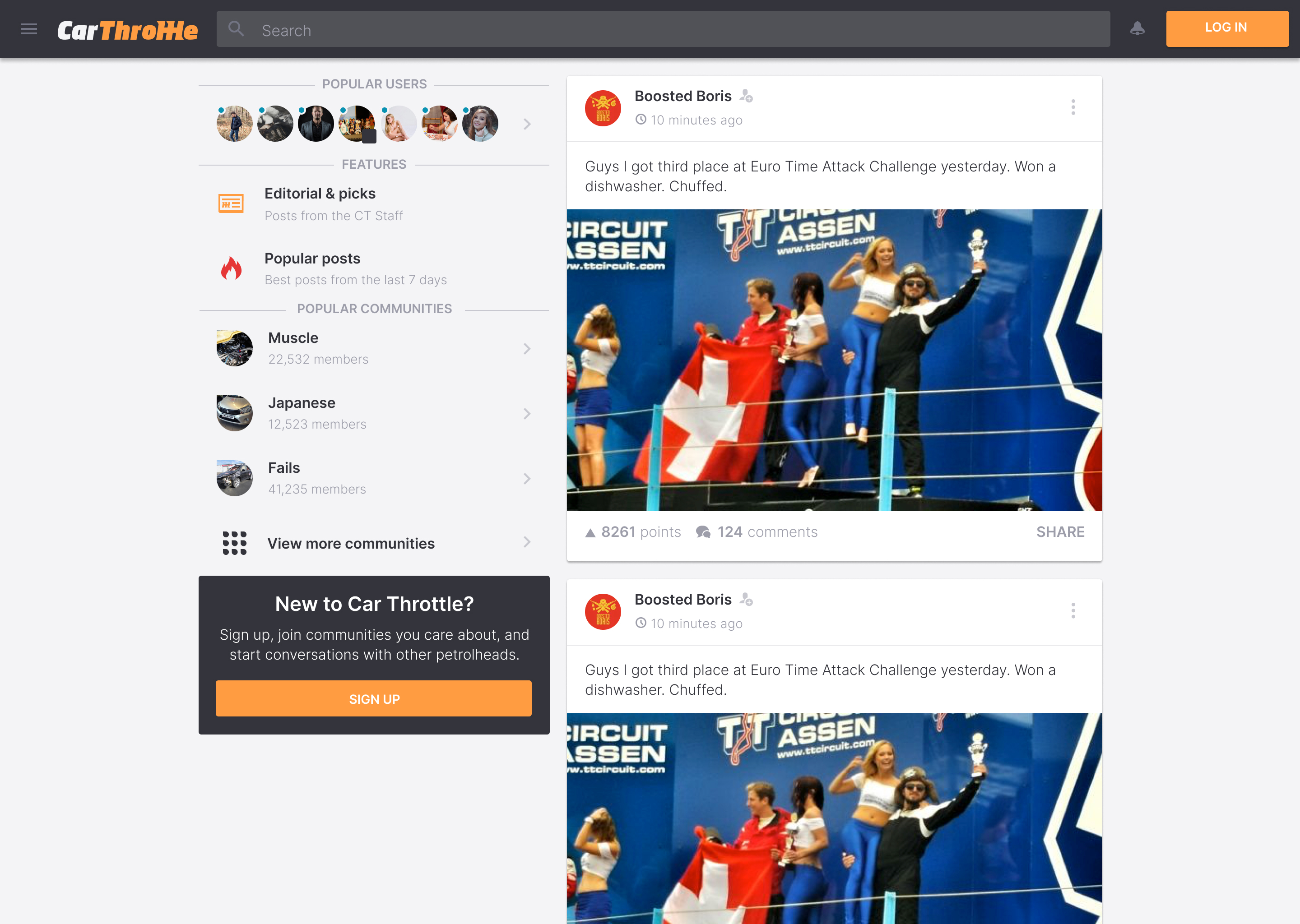
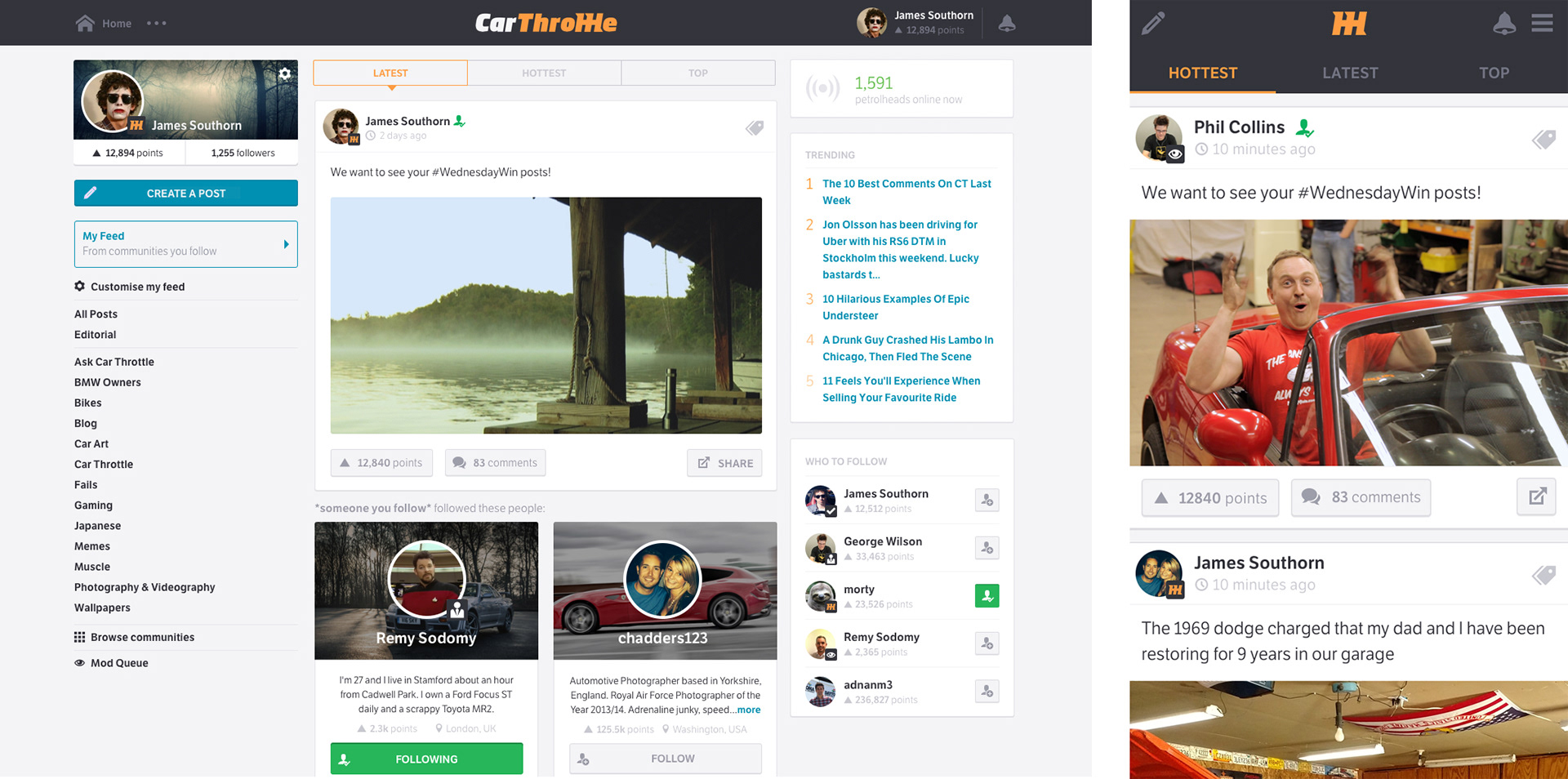
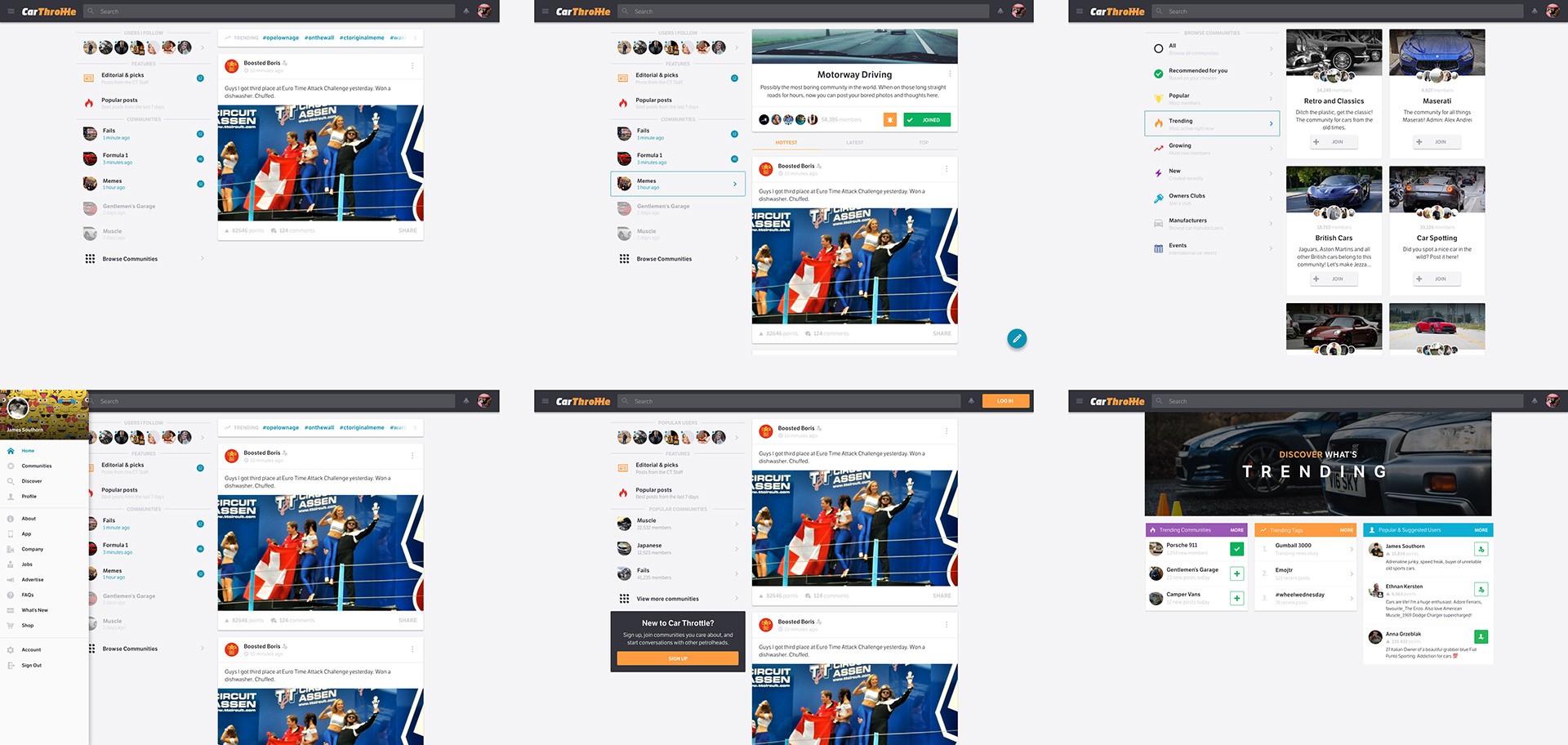
As Lead Product Designer, I drove the end-to-end design strategy to rebuild the product ecosystem. We shifted from a chronological content list to a dynamic, algorithm-driven community feed. I then led the design and launch of the native iOS and Android apps, creating sticky, social interactions such as the user "Garage" and content-creation tools.
This ecosystem scaling and native launch built the foundational audience and capabilities in social engagement that made the platform an acquisition target for Dennis Publishing in 2019.
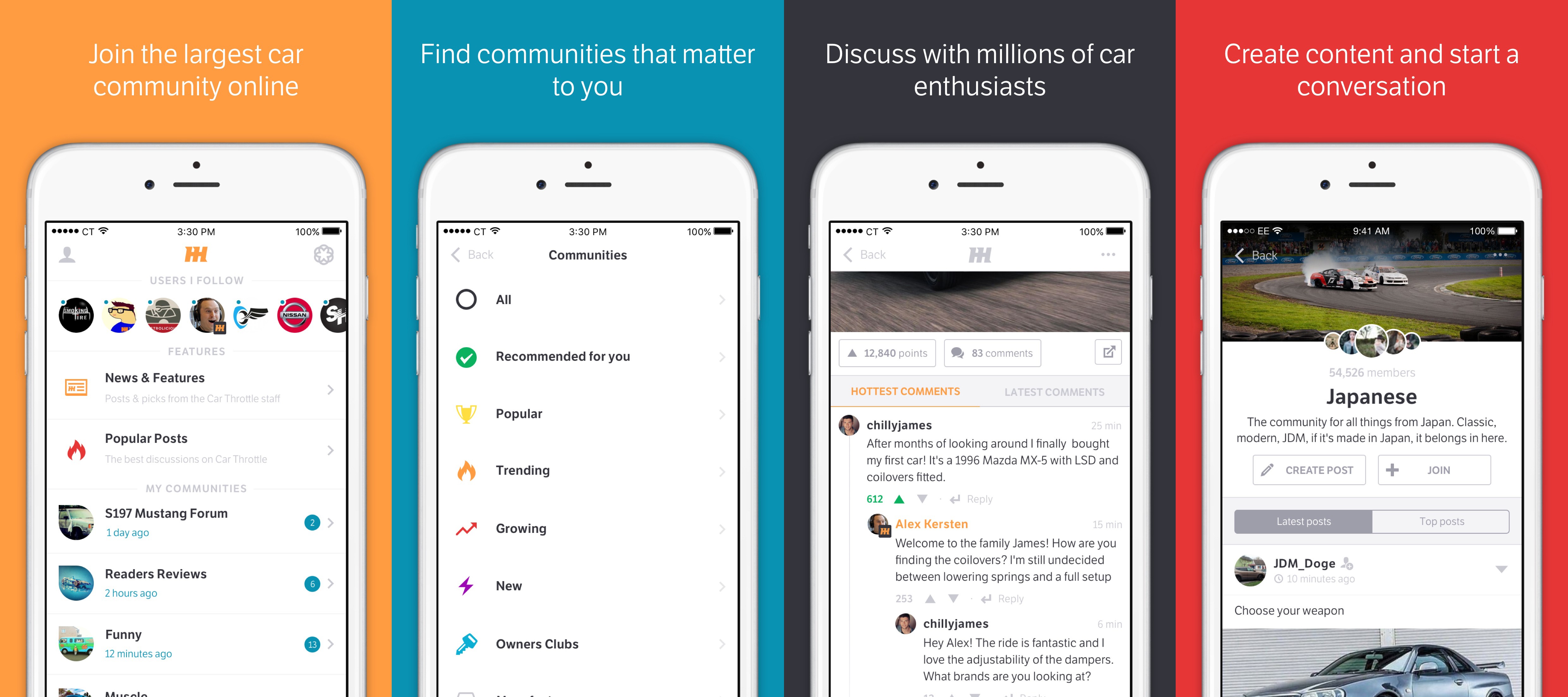
View app prototype
quote-left
Adnan Ebrahim
CEO, CarThrottle
Design Process
Building the Web Platform
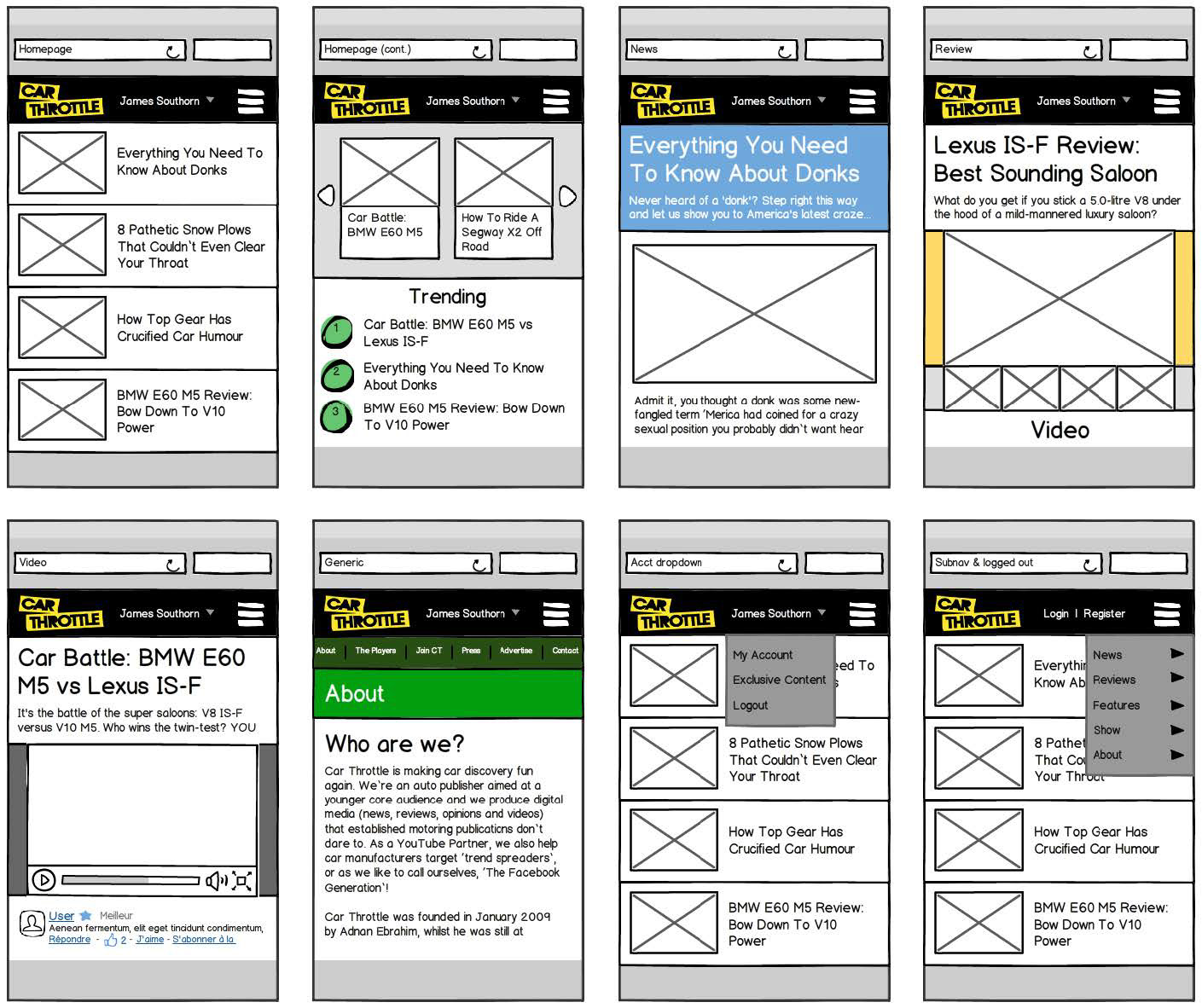
The original site was a "read-only" WordPress blog. To scale, we needed to understand where the friction was preventing community growth.
- Analytics & Heatmap Audit: I used Google Analytics and Hotjar to identify that 60%+ of users were on mobile, but were struggling with long-form editorial layouts.
- Competitive Landscape: I performed a deep-dive audit of Reddit and Top Gear, identifying a "white space" for a platform that combined high-end visuals with raw community interaction.
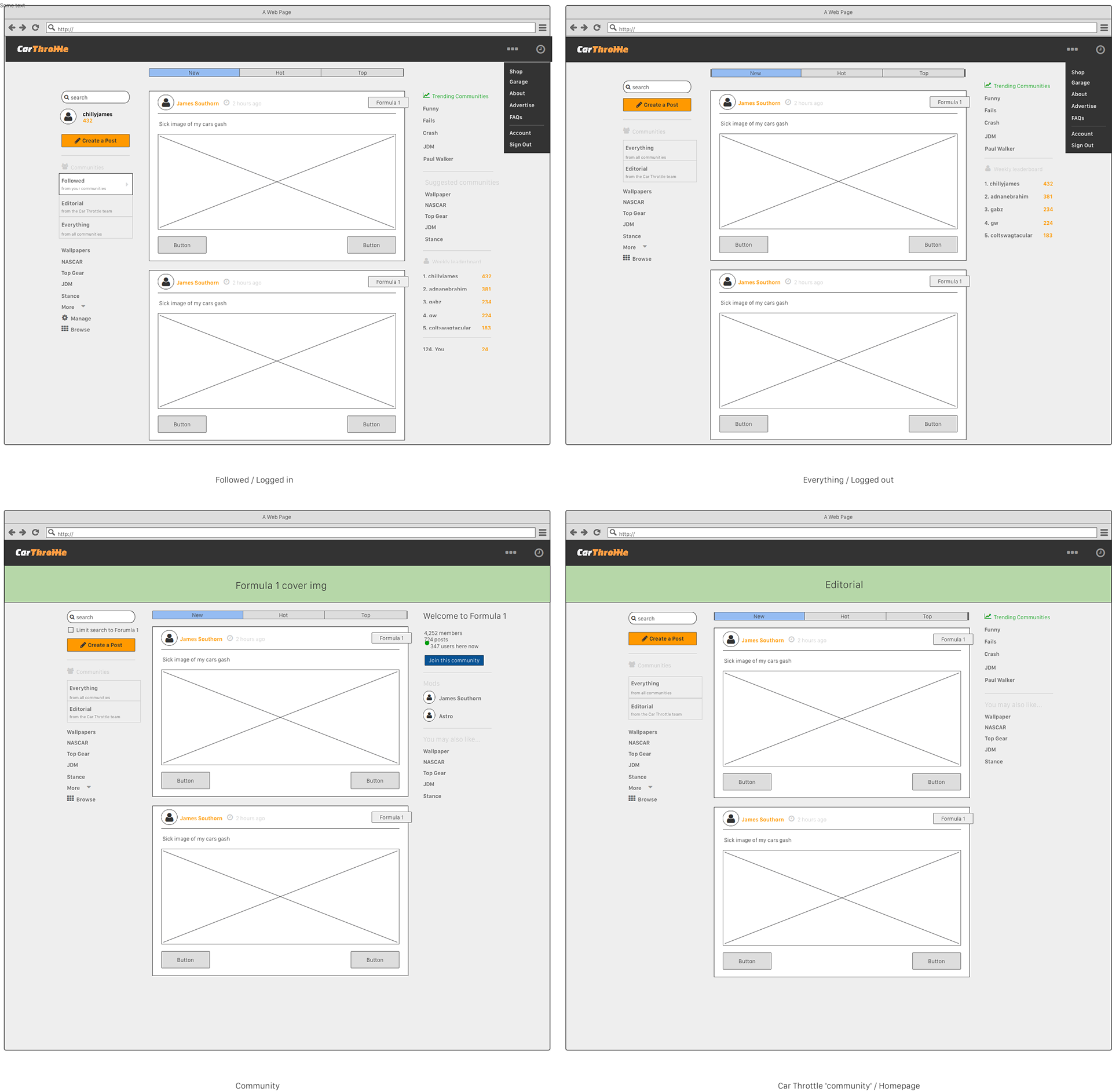
- Outcome: We shifted the Information Architecture from a "Category" model to a "Community" (Hub-and-Spoke) model, allowing users to follow specific car interests.
The Social Pivot (UGC & Interaction)
Transitioning from a platform where editors wrote content to a platform where users created it. This required a massive rethink of the post-creation flow.
- Low-Fidelity Iteration: I produced dozens of wireframe iterations for the "Submit Post" flow. The goal was to make uploading a photo of a car as fast as a "one-tap" experience for users at real-world car meets.
- Stakeholder Ideation: I facilitated workshops with the engineering and commercial teams to ensure our new social "feed" logic balanced user engagement with advertising requirements.
- Outcome: A simplified, "mobile-first" interaction model that resulted in a significant spike in daily User Generated Content (UGC).
Native App Launch
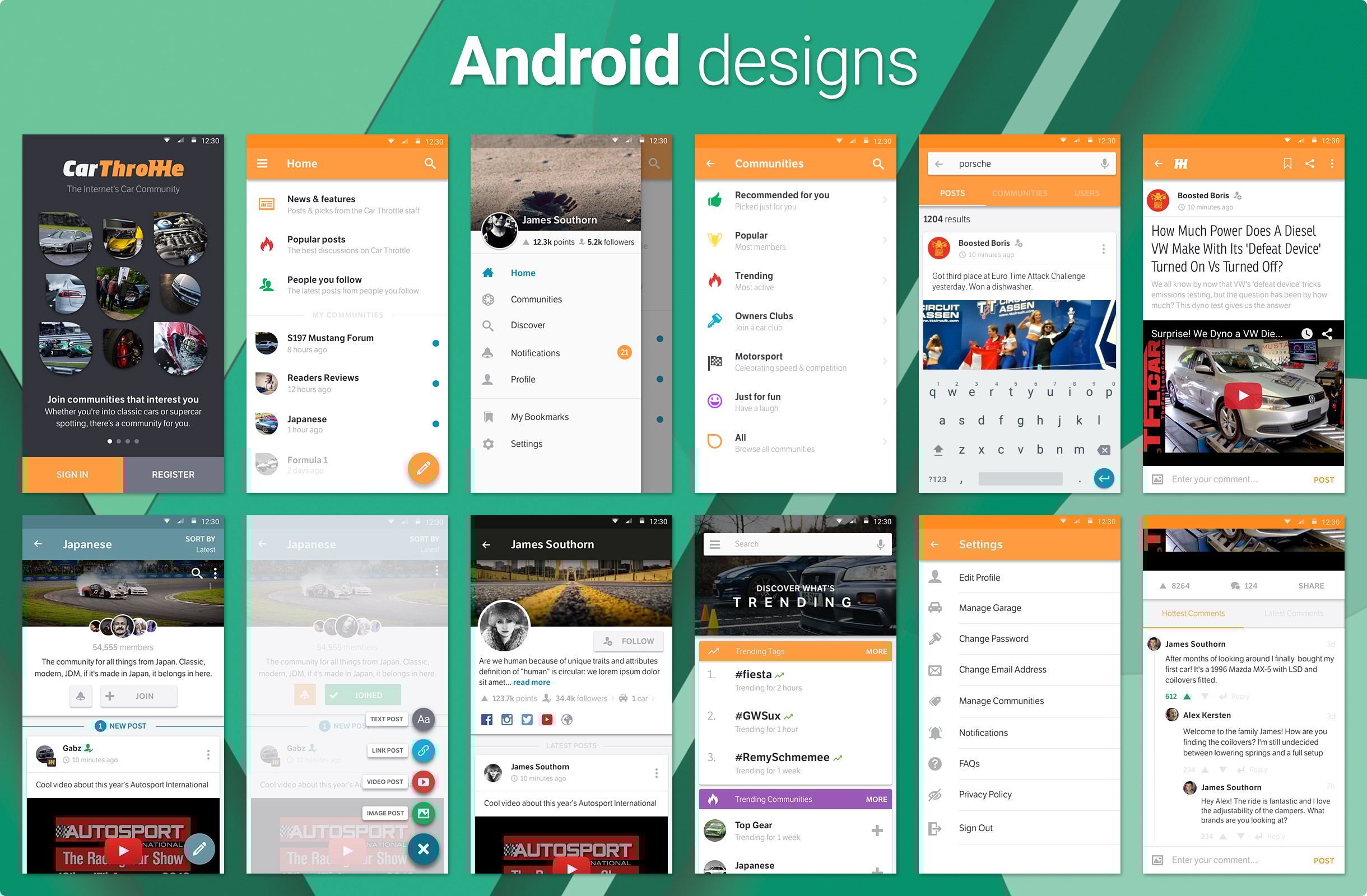
With the responsive site operating at scale, we needed to capture high-frequency users through a native mobile experience.
- High-Fidelity Interaction Design: Designed the mobile app navigation and gestural controls to ensure the feed felt snappy and immersive.
- The "Garage" Feature: Created an interactive digital garage where users could upload their own vehicles and share their builds, which built deep emotional loyalty.
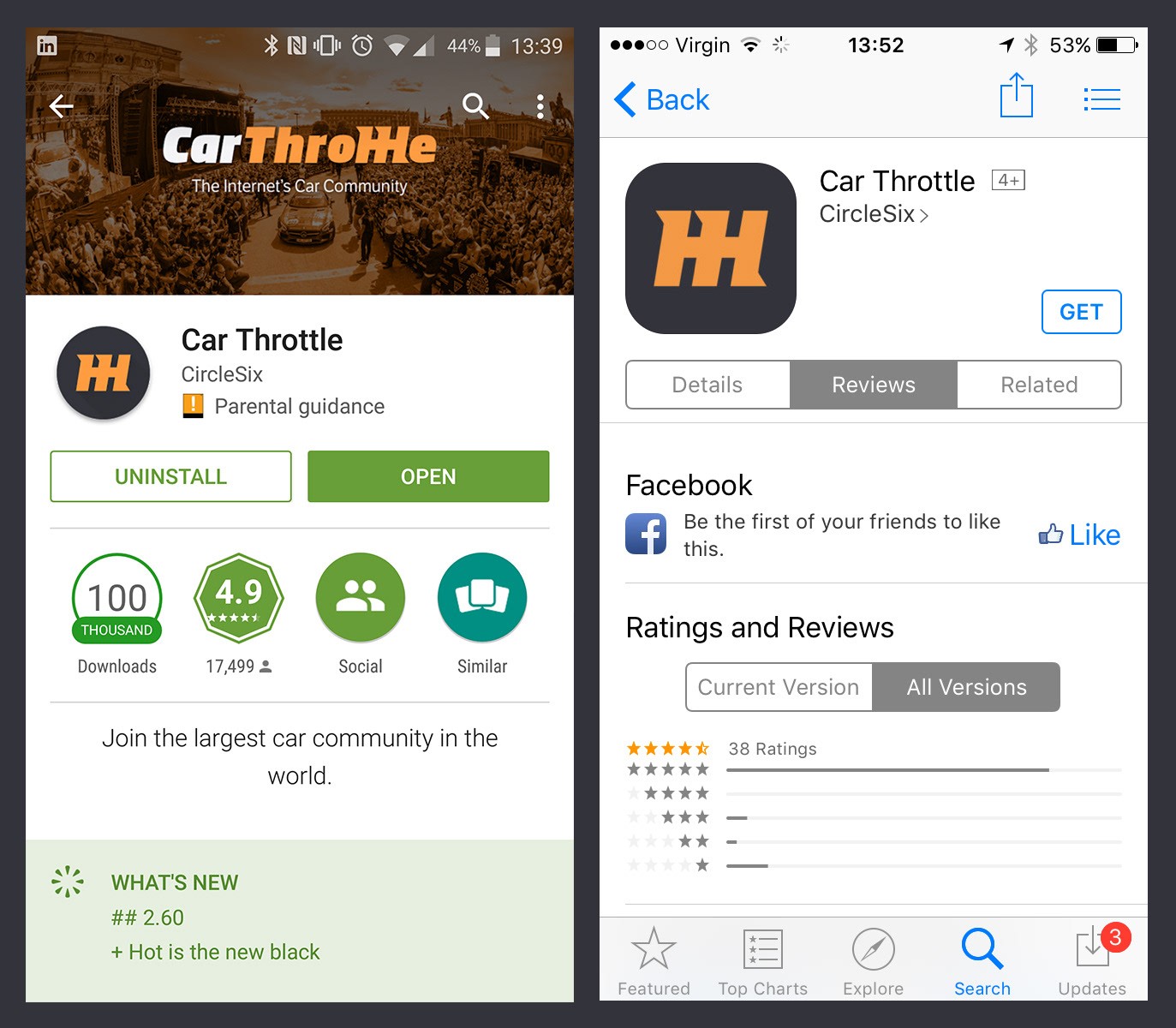
- Results: The app achieved a 4.9/5.0 rating on the App Store with 200,000+ downloads within the first 12 months.
Scaling for 10 million
As the audience reached 10 million monthly uniques, the technical debt and UI inconsistencies became a bottleneck. The engagement, active user retention, and social capabilities we built during this period were the core assets that made the business attractive for its Dennis Publishing acquisition.
- Functional Pattern Library: Before modern design systems were standard, I established a centralised library of reusable UI patterns. I documented typography scales, button states, and grid systems for the dev team.
- Iterative Usability Testing: I conducted continuous "speak-out-loud" testing on new UI features to ensure the platform remained accessible and intuitive as we added complexity (like Video and Polls).
- Outcome: We reduced "design-to-dev" handoff time by 40% and maintained a cohesive brand identity across the entire ecosystem.
back to top